The room was designed by architect Marion Dubois to feel like a Parisian bistrot transported whole to New York. Twenty-four seats around dark American walnut tables, each lit by a single candle in a brass holder. The walls are plaster, painted in a deep cream that shifts with the light throughout service. There are no overhead fixtures — only candles and the warm glow from the kitchen.
I wanted guests to feel they had discovered something that had always been here. The room is quiet enough for conversation, dark enough to feel intimate, simple enough that nothing distracts from the food.
We open the doors at 18h00 each evening. By 18h30, the candles are lit and service begins.
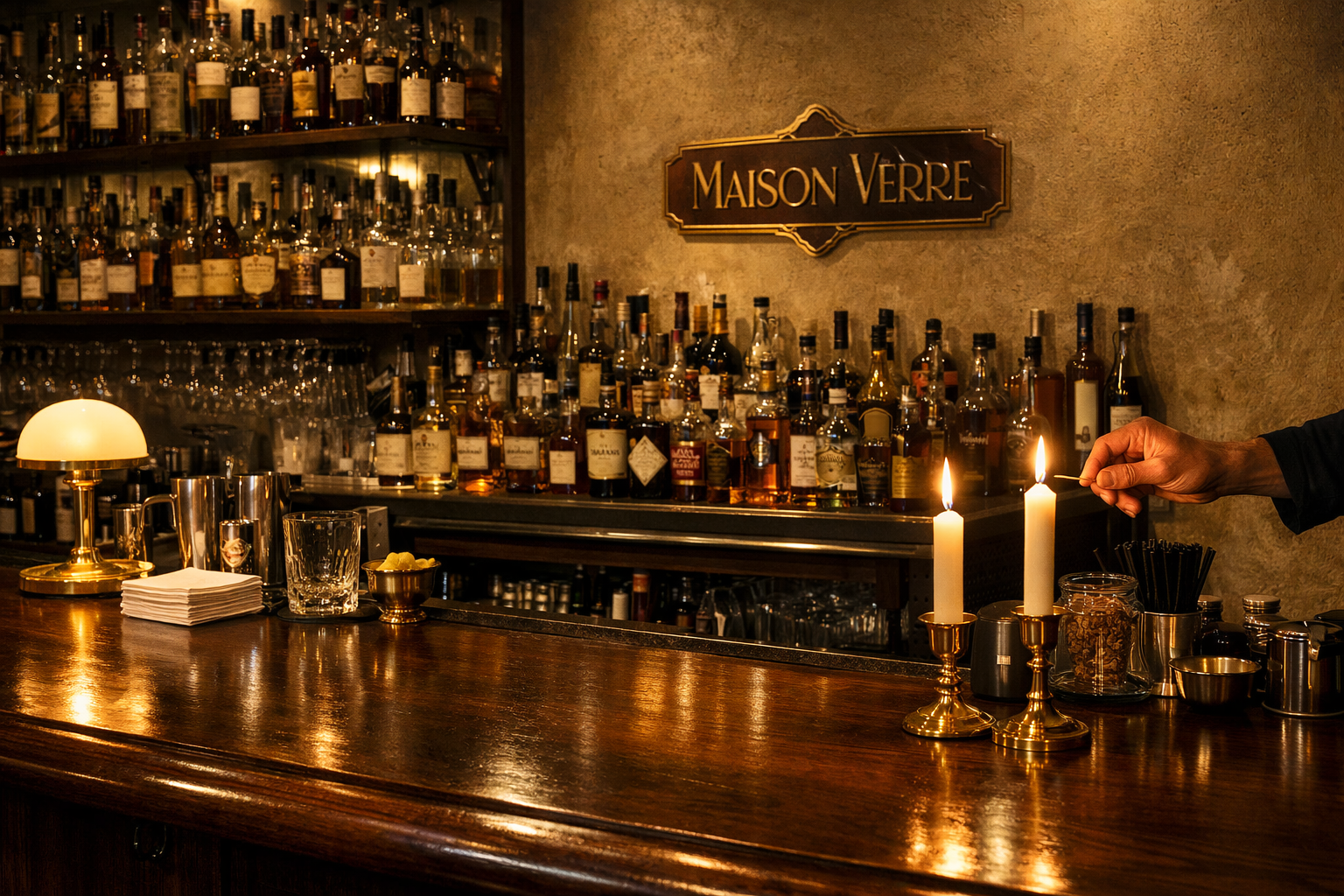
The bar at dusk, moments before service
The kitchen occupies the back quarter of the space, behind a low pass that allows guests to watch the brigade work. It is small — four on the line plus a prep cook — which forces a discipline that I learned in Paris. Every movement must have purpose. Every dish must be worth the space it takes on the menu.
The stoves are French, the knives are German, the plates are made by a potter in Hudson Valley. I plate each dish myself before it leaves the pass.
Service runs from 18h30 to 23h00. After the last guest leaves, we break down the kitchen, blow out the candles, and begin again tomorrow.
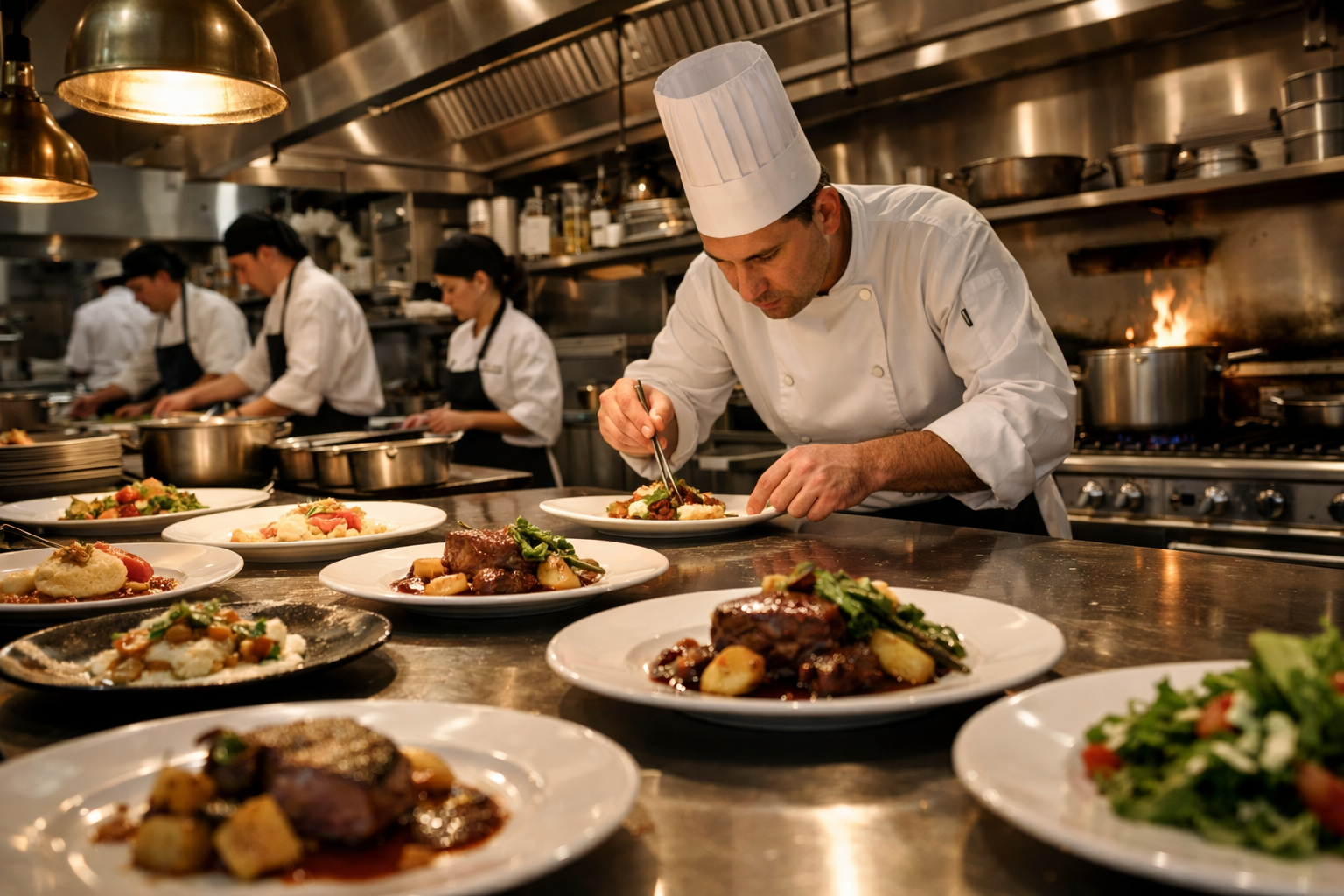
The kitchen pass during the second seating
I trained under Bertrand Grébaut at Septime in the 11th arrondissement, then came to New York to work with Daniel Rose at Le Coucou. Both taught me that a restaurant succeeds when everything unnecessary has been removed.
At Maison Verre, there is no sommelier, no cheese course, no coffee service. We serve seven courses with wine pairings when asked. The menu changes each week based on what our farmers bring us.
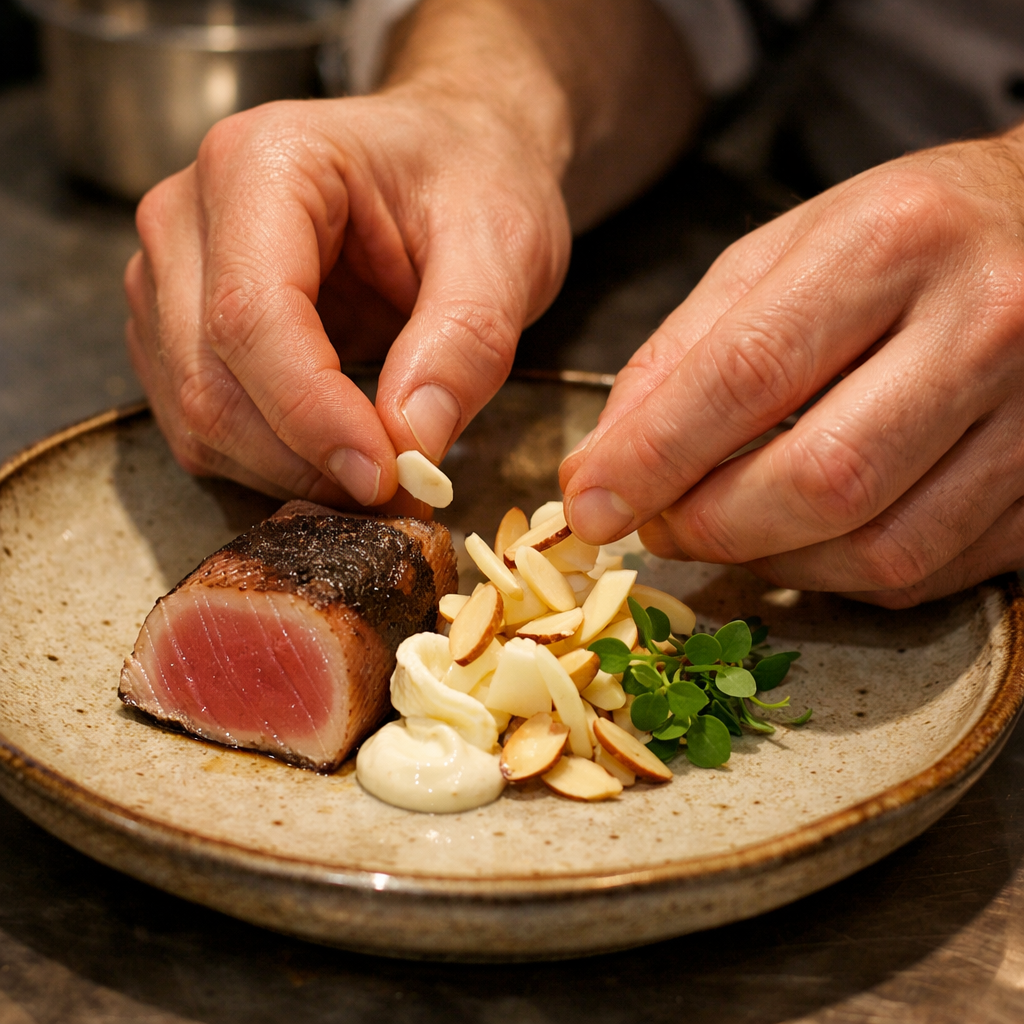
Théo plating the bonito course